La Candelaria (Centro): A Closer Look at Downtown Medellin
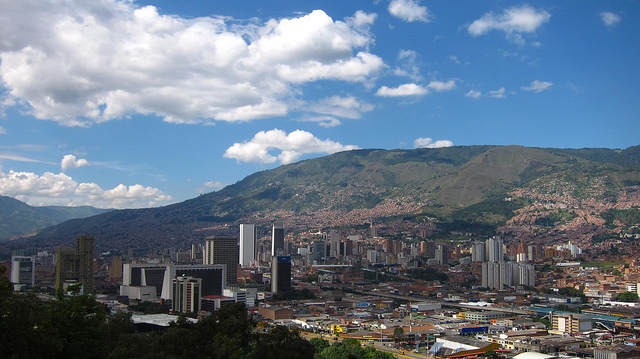
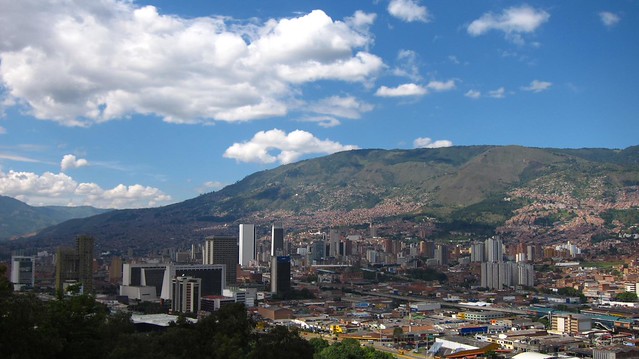
The center of Medellin, known formally as La Candelaria, or informally as El Centro, has a rough reputation but also hidden gems that make this neighborhood one that should not be overlooked when visiting the city, or scoping out a place to live.
History of Centro
Centro was Medellin’s original economic and business sector, and home to the first shopping malls and skyscrapers.
While no longer the only sector of economic importance in Medellin, it still has a distinctly urban identity.
The area around Parque Bolivar was once the cultural center of the city, remnants of which can be seen in old theaters that still open up for free shows on select nights.
However, when Pablo Escobar’s reign of terror made Centro a hard place to live, the moneyed masses of Medellin fled to Poblado, or farther, to Itagui or Envigado.
The present day Centro is a bit grungy and dirty up close, but with a character and humanity unmatched by any other neighborhood in Medellin.
Points of Interest
Centro is easily accessible by both the metro and buses.
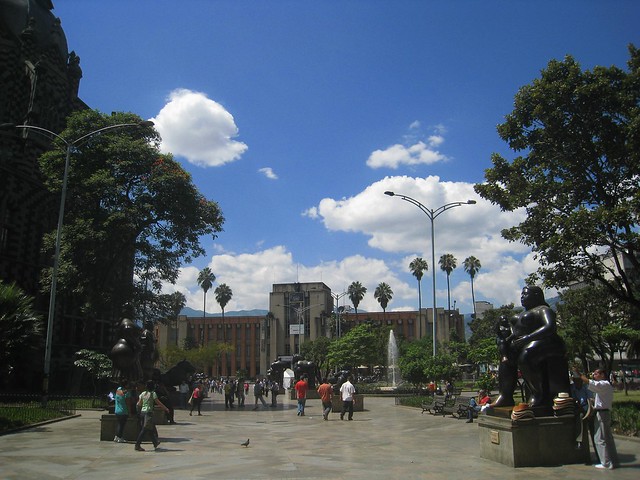
The metro stop at Parque Berrio lets you off into Plaza Botero filled with impressive Fernando Botero statues, showcasing the work of Medellin’s most beloved artist.
The Museo de Antioquia next door houses a fine collection of contemporary art including many paintings and sculptures by Botero.
The Catedral la Candelaria, a massive checkerboard church is located at this same juncture and this spot is the heart of Medellin.
Parque Bolivar is located just a few blocks away, it is bustling plaza filled with a fountain, trees and tons of pigeons that live in adorable wooden houses perched in the trees.
With great street food, fresh flowers for sale and a nice array of Medellin “personalities,” Parque Bolivar is a great place to get taste of the mix that makes up the heart of the city.
On one side of the park is the Catedral Metropolitana, a large cathedral whose claim to fame is that it is one of the buildings made with the largest amounts of bricks in the world. Count for yourself!
On the opposite side of the park from the cathedral begins Calle Junin, which was historically the retail center of Medellin. It was recently repaved into a lovely pedestrian walkway with shops and cafes.
Parque Periodista is a small, oddly shaped block of a plaza which is the meeting spot for Medellin’s “alternative” crowd. Pot smoke and leather jackets abound, and there are often artisans and musicians as well.
There are several cool bars in the area, particularly located on streets La Playa and Maracaibo.
One of note is the popular salsa bar El Eslabon Prendido that hosts a live salsa band on Tuesday nights, and where the dance floor gets so hot the party spills out onto the street.
Safety in Centro
The sketchy thing about Centro is that nowadays few people actually live in it.
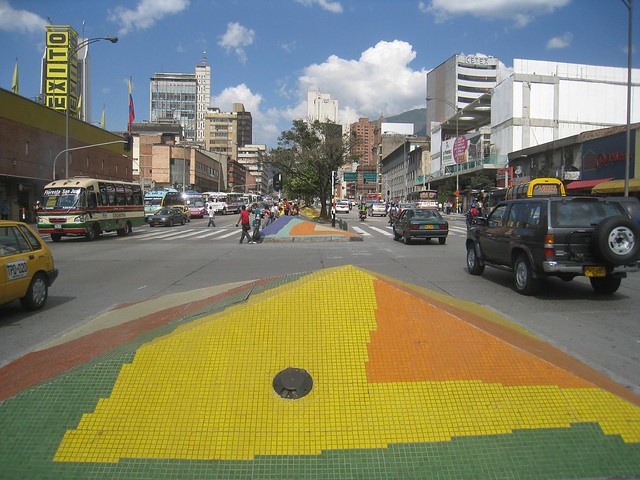
During the day it is a hustling, bustling mass of humanity that is amazing to witness and take part in.
It is colorful and busy, people are selling just about everything and the smells and sounds and sights of the city are intriguing, if repulsive at times.
But at night, the wealthy white-collar workers leave their skyscrapers to return to their homes in the suburbs, and the mass of Medellin’s poor take the long commute to the comunas located in the northern hills of the city.
Yes, people do live in the centro (as the author of this post has), but the population dramatically decreases after dark, leaving the streets scarily empty, except for some suspect people.
Centro can more or less be divided East and West by the major thoroughfare Avenida Oriental, with all the aforementioned points of interest, besides Parque Periodista, being located on the West side.
These areas are best visited during the day as the night crowd can be somewhat questionable.
East of Oriental the neighborhood gets significantly nicer. Around Parque Periodista there are lots of restaurants and bars and Parque Boston, located further East is a great spot to enjoy a beer outside while people watching.
It is safer to be here at night, although if walking alone or in an area you don’t know, cough up the few extra pesos and take a taxi. It’s that simple.
At night, take a taxi.
When going to Centro, only take the money and valuables that you need. Don’t flash around a large camera or a big bag or backpack if you can avoid it.
Use common sense, stick to areas you know and take a taxi when you are unsure.
Cost of Living
People do indeed live in Centro. It is easily accessible to everything in the city. There are plenty of bars and restaurants and shops, plus the rent is pretty cheap.
To rent a room in a shared apartment costs on average between 200,000 to 500,000 COP ($110 – 275) per month.
Inhabitants of Centro will tell you they love it, and wouldn’t live anywhere else. And you might too!