Uber in Medellín: 7 Ways the Service Offers a Superior Experience
“I’m calling an Uber,” I said to my paisa date as we were preparing to leave Los Contenedores, a collection of trendy restaurants built within shipping containers in Envigado.
Confused about why we needed to wait several minutes for a ride when there was a constant flow of taxis heading south on Avenida Las Vegas, I explained to her “Uber is a new service, it’s better, you’ll see!”
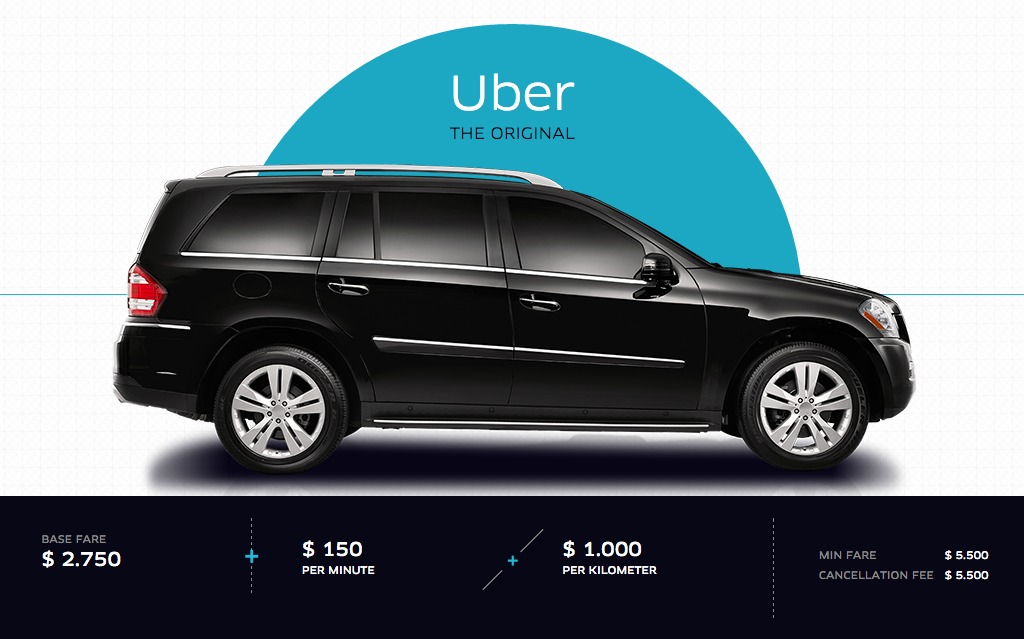
Using Uber’s app, I tracked the arrival of our ride, a clean white SUV with tinted windows. Upon confirming the license plate on the vehicle matched what was indicated in the app, we got inside.
The driver promptly greeted us and offered the standard bottle of water, before I gave him instructions to head for Parque Sabaneta. As we got underway, he asked if the temperature was okay and what kind of music we wanted to hear.
As this was occurring, my date was having a visible “ah ha” moment, the same one I experienced with my first Uber ride in Medellín. Sipping from the now open bottle of water, she noted there was no meter like you see in taxis.
By the time we arrived in Sabaneta, she was asking the driver to quote a monthly rate based on her daily commute.
January 2015 marked the official launch of Uber, a San Francisco-based mobile app that offers an alternative to taking taxis, in Medellín. The month before, Uber made headlines when it was valued at over $41 billion (four times the value of Airbnb).
Since mid-February, I’ve taken 42 rides (50 by the time you read this story). I’m confident once you experience the difference in safety, comfort and convenience offered by Uber in Medellín, you’ll agree with these seven ways it’s a superior service to taxis.
1. Safety
Staying safe is paramount in Medellín, making it reason number one I prefer Uber.
Increased Privacy
As a consequence of being robbed by thieves on a motorbike while riding in a taxi, I now associate the rinky-dink yellow compact cars with a sense of vulnerability. They’re low to the ground and rarely have tinted windows, making it easy for thieves to see inside.
I don’t imagine their light frames fair well in serious traffic accidents either.
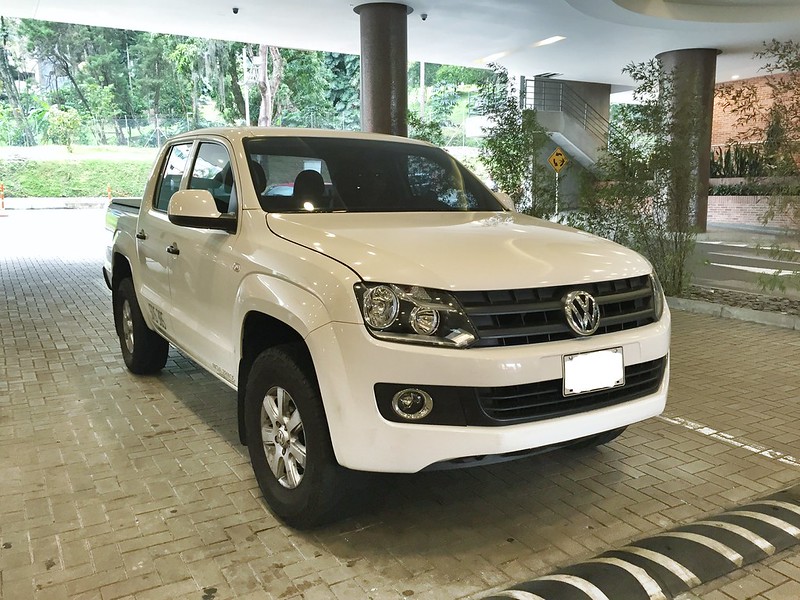
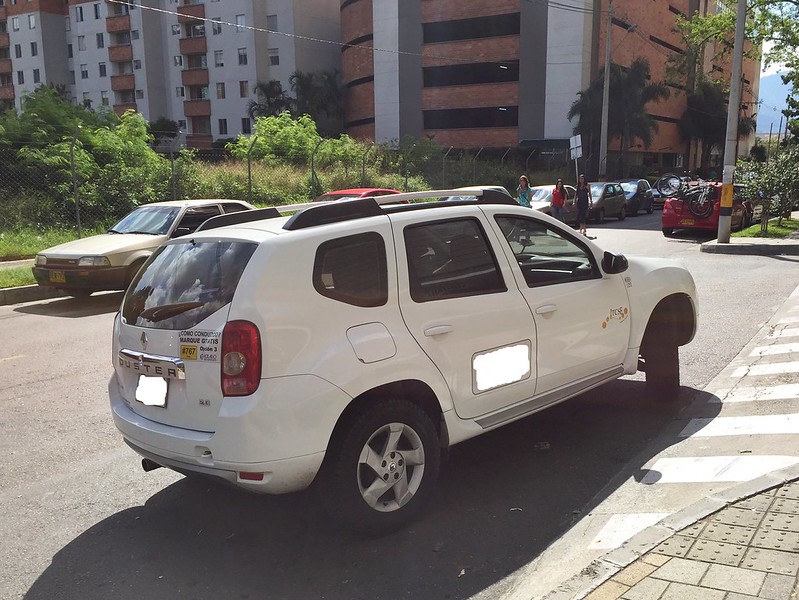
By comparison, Uber’s vehicle requirements for their original service (the only one available in Medellín at this time) are such that about 80 percent of my rides have been in either large pick-up trucks or SUVs, almost all featuring tinted windows.
The remaining 20 percent have been in cars, most of which featured tinted windows as well.
Conservative Driving
On the whole, I also feel taxis drive too aggressively here. On more than one occasion, I’ve felt so unsafe I’ve asked the driver to slow down or relax. Sometimes they take their foot off the gas and other times they chuckle and proceed at full speed.
As a customer, I have no recourse aside from asking the driver to stop and let me out, a massive inconvenience and potentially dangerous request depending on the hour and neighborhood. The driver has no incentive to change as it’s unlikely he’ll ever see me again.
Thus far, my Uber drivers have been noticeably more conservative in how they drive. When I asked one driver whether they were trained to take it slow, he said no, however, it’s in their best interest to drive safely (otherwise they risk poor ratings and reviews).
Why Women Prefer Uber
I’m not alone in viewing Uber as a safer alternative. One driver told me 70 percent of his customers are women, especially on the weekends (when they’re out late partying).
It should come as little surprise that Colombia’s macho culture leads to the sexual harassment (and in some instances, the drugging) of women by taxi drivers. I’ve gotten a glimpse of this when some of my male drivers (and 99.9 percent of my taxi drivers have been male) whistle at or comment toward women on the street.
As I’ll discuss below, Uber’s user rating system encourages a more professional level of service and gives riders a way to report inappropriate behavior. Too low a score or too many complaints and the driver is fired.
2. Comfort
As I already mentioned, Uber maintains certain standards when it comes to vehicles. This is a part of their allure and why users like me are willing to pay a small premium.
When a driver accepts your request through the app, you’ll immediately see his photo, name and model of car, so you know what to look out for while you wait.
Typical vehicles include:
- Renault Duster (SUV)
- Daihatsu Terios (compact SUV)
- Chevrolet D-Max (extended cab pick-up truck)
I’ve also ridden in several VW Amarok trucks and a Jetta. Most vehicles have been white. And the majority of my drivers have also been the vehicle’s owner, which means they’re more inclined to keep it clean and operating well.
Tinted Windows
Almost every vehicle I’ve used has had tinted windows, offering protection from the sun and increased privacy. Sometimes the shade is so dark I can’t see inside even when I’m standing directly outside the door.
After the robbery, I’d stopped using my cell phone in taxis for fear of thieves targeting me. Between the larger ground clearance of SUVs and pick-ups and the tinted windows, I’ve been able to relax and not feel I’m putting myself at risk if I want to send a text message.
Air Conditioning
Once I started rolling my windows up in taxis for safety reasons, it began to get hot and stuffy.
I can count on one hand the times since 2009 I’ve been in a cab anywhere in Colombia with the air conditioning turned on. Almost all prefer to have their windows down instead.
With Uber, I have the opposite experience. The drivers ask about my comfort, and if I prefer air conditioning. During the day, I almost always say yes. This allows me to have the windows up for security and not sacrifice comfort.
Free Water
The offer of a free bottled water (or in some instances, iced tea) is a small but appreciated touch. I accept roughly two-thirds of the time unless I’m on my way to/from a meal.
3. Cashless Transactions
In the United States, the speed and efficiency of financial transactions are continually improving. The goal is to create a frictionless consumer experience.
Colombia and most Latin countries lag years behind in adopting these new technologies, and as a result, are still predominantly cash-based economies.
Sign up for Uber and you’re tapping into an efficiency from the U.S. in Medellín.
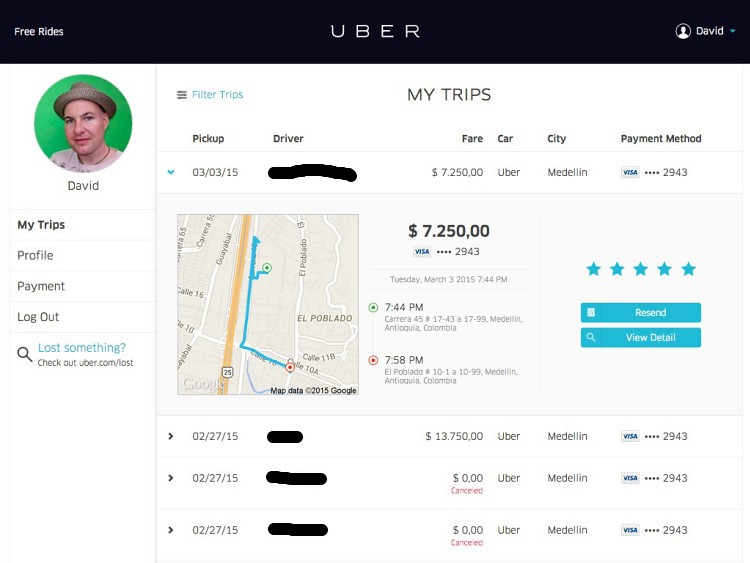
All that’s required when you set up your account is a valid debit or credit card. Each ride is then automatically charged to your account upon completion, allowing you to quickly exit the vehicle at your destination.
This is a fantastic benefit for many reasons:
- No more fussing with cash to pay for every ride.
- Eliminates the need to carry small bills (taxis often have trouble changing 50,000 peso and even 20,000 peso bills). Unlike in the U.S., none are set up to accept plastic.
- Uber drivers don’t expect tips. Therefore, you’re no longer left wondering whether to tip, and if so, how much. (Note: not all taxi drivers give exact change either, some round up assuming you won’t miss a few coins.) You do, however, have the option to set a flat tip rate within the Uber app.
- You avoid the situation where you accidentally spend all your cash on drinks and have to borrow money from a friend to get home.
- You avoid the awkwardness of handing a date money for her taxi. Going a step further, you can even send her home in an Uber knowing the fare will be automatically charged to your account.
These automated transactions naturally lead to another benefit.
4. Electronic Receipts
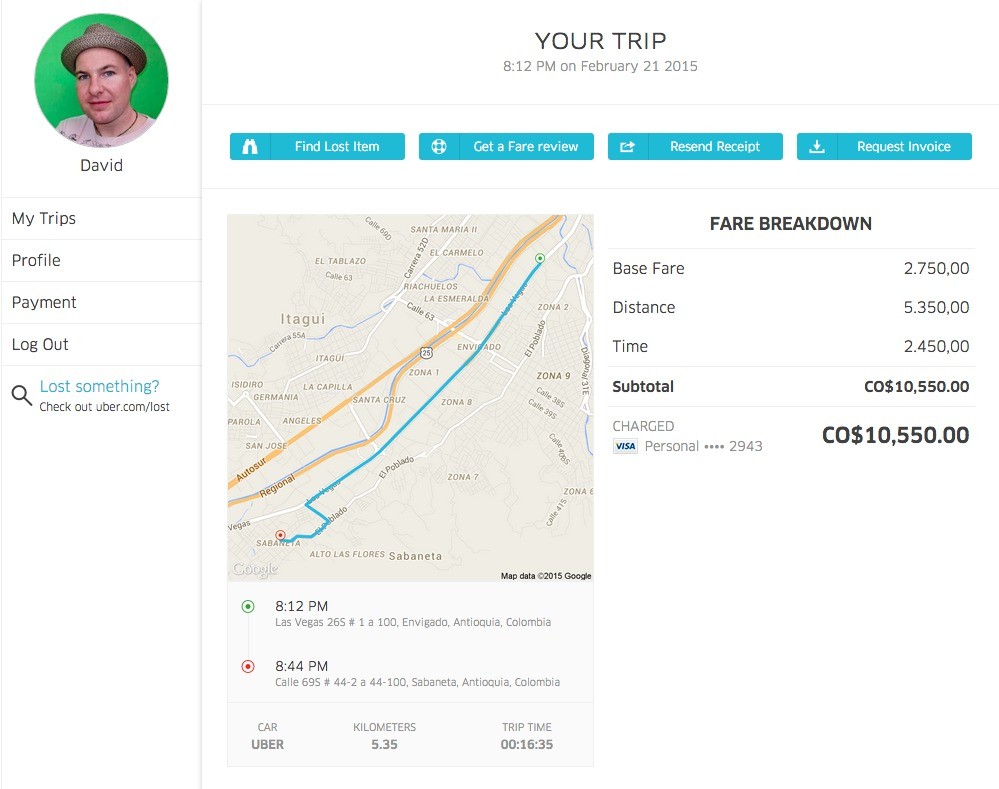
Uber’s app automatically emails the account holder an electronic receipt for every ride. It includes the time, date, a clear breakdown of the fare, driver and a map showing the start and end points.
This is great for me as I track Uber rides for business purposes so I can claim them as an expense on my taxes.
You can view a history of every ride you’ve ever paid for on both the mobile app and website.
5. Rate and Review Drivers
Amazon, TripAdvisor, Yelp, Hostelworld. These sites have revolutionized the ability for consumers to make educated purchasing decisions based on user ratings and reviews.
Uber’s app requires every rider to rate their driver before he/she can ask for another ride.
Drivers who enjoy working for Uber have every reason to treat the customer well to keep a consistently high rating. To receive consistently low ratings risks loss of employment.
Likewise, drivers have the ability to rate riders, which encourages the customers to treat the drivers with respect.
While not yet enabled in Medellín, if a driver or passenger rates the other with fewer than three stars, Uber’s software ensures the two will not be paired again.
I’ve given 95 percent of drivers a five-star rating, and the remaining 5 percent four-star ratings because they either had trouble finding where to pick me up or needed help with directions.
Lack of knowledge about the city is a minor growing pain and to be expected, as most of the drivers working for Uber are doing so as a second source of income.
The majority of my drivers have had a professional background, worked for the city or are university students (one was studying medicine, another environmental engineering).
6. Customer Service
When I invited my friend Don to visit the park in Ciudad del Rio one Sunday afternoon with his dog Ringo, I offered to send them both back to Envigado in an Uber so he could experience the service.
After confirming a ride, I called the driver and asked if he was okay with having a dog in his SUV. He responded “sure, I love dogs.”
Upon arrival, he offered to set out a blanket so Ringo could lay on the back seat though Don waved him off, saying Ringo would be fine sitting on the floor. Per Uber’s policy, it’s at the driver’s discretion as to whether he/she will transport pets. I suspect most are fine with it.
At this point, it should be clear that customer service is central to the Uber experience. From the quality of vehicles to the disposition of the drivers, there’s no comparison between Uber’s service and that of taxis.
Drivers have every incentive to treat the customer well, which is not the case if you’re hailing taxis from the street, calling for pick-up or using other apps like Easy Taxi.
7. Low Cost
You might think with all the benefits I’ve outlined, Uber would be cost prohibitive for those living on a budget in Medellín.
I was surprised to find that’s not at all the case. The cost for the current service is marginally more expensive than taxis while the quality of service is much higher.
In February, I spent a total of 243,000 pesos on 23 rides, averaging 10,565 pesos per ride. Given the current strength of the U.S. Dollar, that works out to $90 total and an average of $3.91 per ride.
Even if the exchange were 2,000 pesos to the dollar, we’re still only talking an average of $5 per ride.
On the topic of pricing, it’s worth mentioning that Uber’s algorithm is designed to work within urban settings. Longer trips are based on flat rates, which are still subject to tweaking as Uber works to set up a fair rate based on driver feedback.
For example, a ride from Medellín to Jose Maria Cordova International Airport is a flat 75,000 pesos ($28) with Uber vs. 60,000 pesos ($22.40) via taxi. A ride from Medellín to Guatape is 160,000 pesos ($60). See more flat rates here.
As the market matures, Uber will introduce additional service tiers appealing to a wider range of budgets, including UberX, a no frills option cheaper than taxis. Check out the four options in Bogotá for a glimpse of the future.
Have you used Uber in Medellín, or anywhere in Colombia? Share your experience in the Comments below.