How to Buy and Use Cell Phones in Colombia
Editors note: this article is out-of-date and was updated in 2017 on this site to include the newest cell phone regulations in Colombia.
Colombia opened up its telecommunications industry in 1991 so the country has a relatively modern telecommunications infrastructure with several competitors.
The mobile market has been one of the fastest growing industries in Colombia with the country now having more cell phones than people.
For mobile phone services, Colombia has three main competitors and several smaller mobile virtual network operators (MVNOs) that use one of the main competitors networks.
Claro, the local Colombia brand of Mexico-based América Móvil, is the largest telecommunications provider in Colombia.
The company has the largest wireless network and typically has the best wireless network coverage throughout the country, including the smaller pueblos.
Colombia has two additional major mobile competitors in Colombia: Movistar, the local Colombia brand of Spain-based Telefónica; and Tigo, the local brand of Sweden-based Millicom.
Colombia also has several smaller MVNOs, including: Virgin Mobile (which uses Movistar’s network and has a bit over 1 million subscribers) and several others that I understand use Tigo’s network including Exito, Uff!, ETB and UNE, each with relatively small subscriber bases.
Most cell phone users in Colombia currently use 3G networks but several mobile providers in Colombia have started rolling out 4G networks.
In 2013, five different companies won the right to offer 4G in Colombia: Claro, Movistar, Avantel, DirecTV and a consortium formed by ETB and Tigo.
Buying Cell Phones in Colombia
You can purchase unlocked cell phones in any major city in Colombia, both smartphones as well as basic function phones. You can also purchase used phones, but make sure you do so from a reputable vendor. You can also buy cell phones through mobile service providers.
To buy cell phones in Colombia most vendors typically will require an ID, either a passport or Colombian ID.
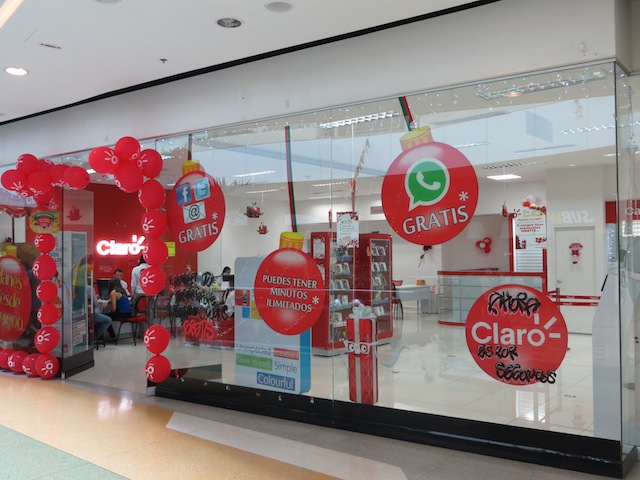
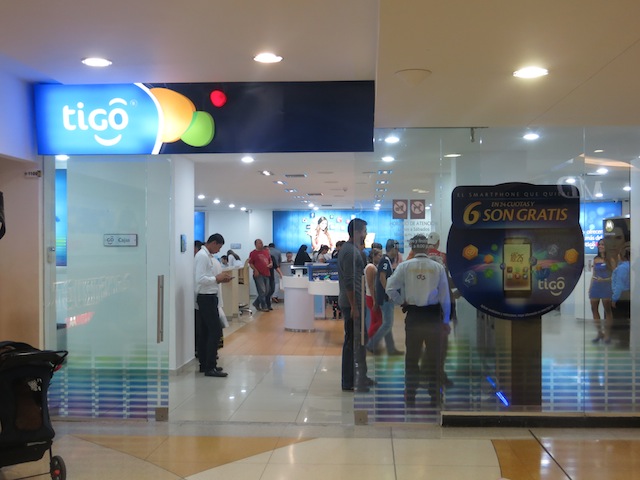
Each of the three major mobile phone providers has stores in most of the malls in the cities in Colombia. They also have smaller kiosks set up in many grocery stores such as Exito and Jumbo.
If you buy a phone from Claro, Movistar or Tigo they provide prepaid (prepago) and postpaid (postpago) options.
A prepaid phone will be more expensive as it doesn’t require a contract and it will be pay-as-you-go, adding minutes when you need to.
A postpaid phone will be cheaper (subsidized) but will require signing a contract and also will require a Colombian ID (cedula).
I personally would recommend against buying a cell phone in one of the Claro, Movistar or Tigo stores as you can find cheaper cell phones in other locations.
In Medellín, two good places to buy cell phones are Monterrey, Medellin’s technology mall, or in El Centro.
Monterrey has several stores selling cell phones. I recently bought a new unlocked Samsung S5 Mini in a store in Monterrey with a price of 900,000 pesos ($379). On Amazon the same unlocked cell phone sells for $326.29. Cell phones are somewhat more expensive in Colombia than in the US.
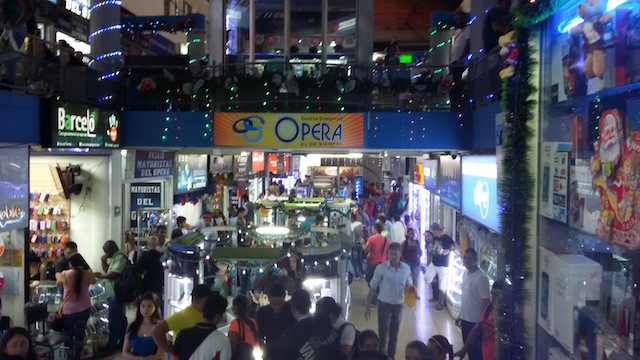
Another good place to buy cell phones is in El Centro behind the Nutibara hotel. Behind the hotel is Centro Comercial Opera, which is a small mall with many small shops in the mall and nearby that specialize in selling cell phones.
You can find vendors selling both new and used cell phones here. It is possible to find a basic function cell phones starting at about 30,000 pesos ($13) and Android smart phones starting at about 250,000 pesos ($106).
Using Cell Phones from Other Countries
Many mobile providers in other countries have roaming agreements set up in Colombia, so if you have international roaming set up on your cell phone it will work in Colombia, but it will also typically be expensive.
If your cell phone is unlocked it is very inexpensive at about 5,000 pesos ($2.11) to buy a SIM for any of mobile providers in Colombia.
On occasion, I have also seen representatives of Claro, Movistar and Tigo handing out free SIMs outside a few of the metro stations in Medellín, trying to get metro passengers to switch mobile providers.
Be careful of buying a SIM from a non-mobile phone provider store, as it likely will be registered in the store name. I recommend registering a SIM in your name so you can keep the same phone number if your phone is lost or stolen.
To use an unlocked cell phone in Colombia, keep in mind that GSM 850 and 1900 bands are used in Colombia.
If your unlocked cell phone has GSM 850 and 1900 bands it should work in Colombia. A CDMA phone will not work in Colombia. In the US, both Verizon and Sprint use CDMA.
An unlocked GGSM quad band phone is a good choice for Colombia and other countries. The most widely used cell phone technology in the world is Global System for Mobile Communications (GSM), which is used in over 200 countries and territories.
If you bring an unlocked phone to any of the Claro, Movistar or Tigo stores they can install a SIM and configure the phone. Note that starting in 2016, to activate/register cell phones bought elsewhere (from outside of Colombia or purchased in a non-Claro/Movistar/Tigo store you may be required to show a receipt to prove it wasn’t stolen.
Using Cell Phones in Colombia
Making calls from one provider (Claro, for example) to another (Movistar or Tigo) is more expensive than making calls between the same provider (Claro to Claro, Tigo to Tigo, Movistar to Movistar). Calls between the same provider typically cost less than 200 pesos (< 8 cents) per minute.
So you might want to find out what provider most of your friends use before deciding on a mobile provider.
The higher cost to make mobile calls between providers is why you see vendors in parks and on street corners handing out cell phones to customers to place a call.
They typically have orange or green vests, splattered with the names of the three major cell phone providers: Comcel, MoviStar, and Tigo.
These vendors have phones from all three companies that are stuffed in their pockets or dangling from chains and they typically charge 200 pesos per minute.
It is also important understand that in Colombia only the person initiating a mobile phone call will be charged for the call, the receiving party is not charged for the call.
This has resulted in the infamous ‘one ring’ phone call where someone calls another person, lets it ring once, hangs up, and then waits for the other person to ‘return’ the call; this is normally done when someone has little credit on their phone to make calls.
Claro has the most mobile subscribers in the Colombia so Claro is a good choice for many people. I have used Claro since I started traveling to Colombia in 2006. For folks that have traveled to Colombia for several years, Claro previously was known as Comcel until they rebranded.
To call a Colombia landline from a Colombia cell phone, you dial:
03 + area code of city + landline number
Where the area codes for major cities in Colombia are:
- Barranquilla – 5
- Bogotá – 1
- Cali – 2
- Cartagena – 5
- Medellín – 4
- Pereira – 6
To call a Colombia cell phone from a Colombia landline, you dial:
03 + cell phone number
Keep in mind that calls between landlines and cell phones are fairly expensive; it’s cheaper and easier to communicate between cell phones.
To call a US phone from a Colombian cell phone (Claro), you dial:
00444 + 1 + area code + phone number
To call a Colombian cell phone from the US, you dial:
011 + 57 + phone number
Text messages are considered data in Colombia and cost extra to send. That is why WhatsApp is very popular in Colombia with people sending messages using WhatsApp when connected to Wi-Fi. Many of the malls and cafes in Colombia have free Wi-Fi.
I have a prepaid Claro cell phone and I normally recharge it monthly with 20,000 pesos ($8.44). I don’t make that many calls, plus I typically only use data when connected to Wi-Fi.
You can recharge cell phones in Colombia in many places, including mobile provider stores, grocery stores and many street corners.
Using Colombian Cell Phones Internationally
You can also use a Colombian cell phone internationally if you set it up for roaming. I have my Claro cell phone set up for international roaming and I have used it throughout Latin America and the US.
Since Claro is part of Mexican telecommunications giant América Móvil, it has roaming agreements established in over 100 countries throughout the world.
To set up international roaming, I had to go to a Claro store to sign some paperwork. I have a prepaid Claro phone so before I travel internationally, I typically recharge my phone with 60,000 to 100,000 pesos, depending on how long I am traveling.
Claro has a preferential prepago international roaming rate of 2,900 pesos ($1.22) per minute established in the US, Argentina, Brazil, Ecuador, El Salvador, Guatemala, Mexico, Panama, Paraguay, Peru, Puerto Rico, Dominican Republic and Uruguay.
In other countries like Canada and Spain, Claro’s prepago international roaming rate is 3,900 pesos ($1.64) per minute.
Movistar’s prepago international roaming cost is higher that Claro’s at 3,999 pesos ($1.68) per minute to the Movistar countries of Argentina, Brazil, Chile, Costa Rica, Ecuador, El Salvador, Spain, Guatemala, Mexico, Nicaragua, Panama, Peru, Uruguay, the UK and Venezuela.
For the rest of the world including the US and Canada, Movistar’s prepago international roaming cost is 6,199 pesos ($2.61) per minute.
According to their website, Tigo doesn’t look to offer roaming to as many countries as Claro or Movistar. For roaming in the US, Brazil, Mexico, Panama and Peru, Tigo’s prepago international roaming cost is 2,999 pesos per minute for local calls and 3,999 pesos ($1.68) per minute to other countries.
For Spain and Italy, Tigo’s prepago international roaming cost is 3,999 ($1.68) per minute for local calls and 6,199 ($2.61) per minute to other countries.
The Bottom Line
There are several mobile provider options in Colombia with pretty intense competition that helps keep prices relatively low. It is very easy to get a prepaid cell phone set up in Colombia and easy to recharge cell phones.
Claro is the biggest telecommunications provider in Colombia with the largest mobile network and the most customers, so it likely it the best choice for most foreigners traveling to Colombia.
Also make sure to use common sense when using expensive smart phones like iPhones in Colombia as smart phones are a common target for thieves.
For example, it is not recommended walking around El Centro in Medellín brandishing an iPhone.
A common expression in Colombia is “no dar papaya” or don’t give opportunity. Brandishing a smart phone in El Centro is an example of “dar papaya.”